Week 11: Potatoes & Pasta - My 2 Favorite Carbs
- Nov 20, 2017
- 5 min read
Day 1: As we walked into the kitchen, Chef told us we were going to have a pop-up event- which meant that random guests were going to come through the kitchen, walk up to our table and try the dish that we were assigned. Which seemed very random and somewhat stressful but nothing us college students can’t handle. Chef then pulled us to the front of the kitchen, near the hot line and told us he was going to demonstrate a variety of ways to make potatoes. The catch being one of the techniques he taught us was going to be our assigned dish & we weren’t allowed to ask questions after he was done demonstrating.
There were many different techniques that he taught us all but none seemed impossible to make. The only thing I was majorly worried about was not being able to ask questions as we were making our dish – at least I had my group to lean on if anything become super confusing.
One of my favorite techniques he explained to us was ironically the dish we randomly chose to make for our pop-up event –Duchesse Potatoes! The ingredients & steps were as follows:
1 pound of potatoes
2 oz. of soft butter
2 egg yolks beaten
Freshly grated nutmeg (as needed)
Salt (as needed)
Ground black pepper (as needed)
-Scrub, peel and cut the potatoes into large pieces. Boil or steam until tender enough to mash easily. Drain & dry them over low heat or on a sheet pan in a 300 F oven until no more steam rises from the, 10 – 15 minutes. While the potatoes are still hot, puree them through a potato ricer into a heated bowl.
-Add the butter & egg yolks. Season with nutmeg, salt, and pepper and mix well by hand
-Transfer the mixture into a piping bag and pipe the mixture into the desired shapes on a sheet pan lined with parchment paper
-Bake in a 350 F oven until the potatoes are golden brown and heated through, 10-12 minutes. Serve immediately.
Seemed easy enough- right? The whole process did until Chef walked near and told us our potato pieces were far too large to boil in the amount of time we had left. Panicked we took them out and cut them into smaller but at the same time large pieces and placed them back into the pot. Which limited us on time which then forced us to take out our potatoes before we needed to which delayed some of our required steps – but the dish still turned out delicious!
Chef continued to yell out that our guests were going to be in the kitchen soon…but he’d only remind us at the most awkward times which made my group start to wonder if there even were guests coming in to taste our dishes…
It was a trick the entire time! No guests were coming in and we were able to eat all the variety of potato dishes for ourselves – which made my whole day. Before Chef allowed us to dig in he told us how interesting & diverse it is to see 1 single ingredient turned into a variety of dishes that mean so many different things.
My AHA moment, was when Chef was talking to us about how diverse food ingredients are and how the concept of food can become a great bridge to connect one region with another. It amazes me that a single ingredient like a potato can be used in a totally different way in Germany versus Vietnam or even America. I love the connections food can make.


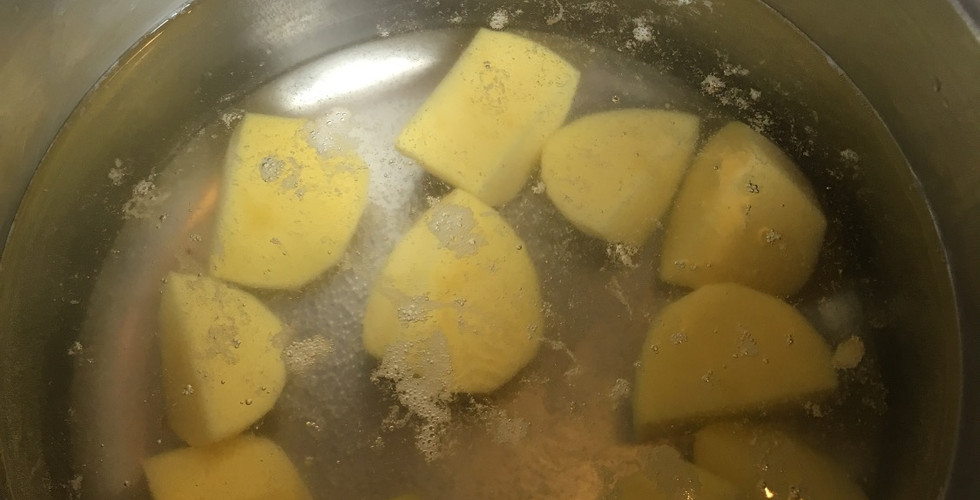


Here is the recipe for Duchesse Potatoes, the larger pieces in the boiling water & the fancy finished product on the table that we presented to the rest of the class.
Here is a demonstration video of Chef showing my group how to use the piping bag to create beautiful shapes for the potato mixture we made!
Day 2: Considering Pasta Palooza was right around the corner, Chef thought it would be incredibly beneficial for the class to have a pre-prep day period of time to feel the most prepared for the following week. He taught us how to prepare our wet & dry kit which was going to make our pasta dough and even how to roll & cut our pasta. He first began showing us how to mix each of the kits together (which we were not instructed to do until the following week) but it allowed us to know what to do on our prep day.
After he showed us that technique he excused us to go and complete our wet & dry kits so they were ready for prep day. The ingredients were as follows:
Wet kit:
2 T milk
1 T extra virgin olive oil
¾ C of water
1 whole egg*
5 egg yolks*
*We were instructed not to add those ingredients until our prep day into our wet kit
Dry kit:
10 oz. AP flour
10 oz. of semolina
2 tsp. of salt
These kits were easy to make and really made it easier to get started faster on our prep day for our event! Once everyone had finished putting these together Chef taught us how to make the pasta dough itself. He showed us the “well method” and how to knead our dough so we could make the most perfect pasta ever! Once we were finished with the mixing & kneading it was time to roll and cut the dough – which seemed simple in theory but was really hard to actually accomplish (especially if you’re by yourself). Luckily, Chef gave everyone an opportunity to practice using the pasta rollers/cutters before our event day so we could feel better acquainted with the machine and more comfortable using it at a faster pace.
My AHA moment, it was when Chef told us how important it was to be extra ready for this next event & reminded us that the level of preparedness we were at would indicate how successful we would be for the following week. I am extra glad he reminded us of that because it had me ask more questions about his techniques for the pasta and figure out the why of each step so that when it was solely our turn to make the dough and roll/cut I would know how to do each step along the way!


Here are some pictures of Chef giving us instructions on our wet & dry kits for our pasta dough, him kneading the dough and some of the finished noodle products that he had cut out for us to enjoy!
Here is a video of Chef showing us the proper way to mix our ingredients for our pasta dough and how to know the right balances and items to put in our mixing bowl.
Integration from Another Class into This Class or My Future Career
I am currently enrolled in HA 270 which is the hospitality technology class. The class itself seems quite boring at first glance but as I’ve gone through each of the weeks thus far I have realized how important the material my professor is teaching us. Of course, when I am older and have my own career I won’t have to do all of the things that were taught to me in HA 270 – but it is equally as important for me to understand the gist of what my employees or co-workers are doing. The same can be applied with HA 243, sure I won’t know how to prepare a fantastic meal for a group of guests but I will know the basics of what my kitchen staff is doing with their menu choices and the why of each item which can help me understand and appreciate what my team is trying to do.


Comments