Week 8: Cooking with Your Senses & Intentional Techniques
- Oct 20, 2017
- 5 min read
Day 1: We began the class off by following Chef around the kitchen as he showed us our finished meats for our event day for this upcoming week. He went over the techniques of how each of the meats was cured, rubbed, prepared and handled so we each had an understanding of what to say to our guests on event day. The meat my group has is honey-cured bacon – AKA the most delicious meat being served. The bacon comes from the pork belly and was first cured with salt, insta-cure and honey. It was left cured for about 5 ½ days and was then rinsed. Then the meat was dried for two days, then smoked for 4 hours with apple & hickory. And yes of course, it was made with love.
Chef finished telling us about our meats and then pulled us over to the other side of the kitchen to show us his demonstration for the day. Today was focused around the cooking technique called sautéing. Which had a numerous number of steps to the process:
Make pan hot with nothing in it
Coat the bottom of the pan with canola oil and what until a shimmer is present
Dry off chicken
Place chicken in pan with the presentation side first
Over time, peek underneath the chicken for color
Reduce heat once the chicken is at a darker reddish/orange color
Turn heat back up once the chicken is white halfway
FLIP! Skin of the presentation side should be crispy
Reduce heat
Add about a tablespoon of butter and herbs
Spoon butter & herbs onto the chicken consistently until 165 degrees
Once finished, place the chicken in between 2 plates for 2 minutes
Slice against the grain
Season both sides
ENJOY!
As Chef was explaining the said steps above he said it was important to cook with our senses rather than temperature or time. It’s just as important to know with our senses of when we should take our dish out of the pan, or add more seasoning or turn the temperature up. Which led me to my AHA moment of the week. In order to be a great cook you need to have a cooking intuition. Which I am going to make a priority of mine throughout this semester & even beyond. This class’ purpose is to help students learn the fundamentals of a professional kitchen but also to develop a sense about food.
Then we were turned loose to go prepare our sautéed chicken breast. Finally, we were able to cook our chicken that we had preciously cut the week before. We used the technique of sautéing which Chef mentioned was “super easy…but super hard at the time same time” – and I now see his point. But the chicken ended up being absolutely delicious and definitely satisfied my hunger craving.

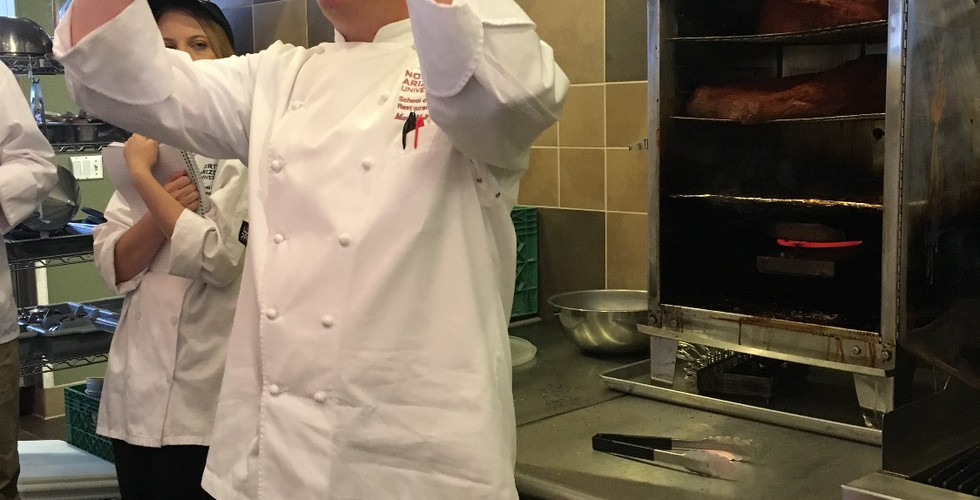


Here's some pictures of Chef explaining to us some methods to smoking meat, then his demonstration then our demonstration in progress.
Here's a video of Chef explaining how to cut against the grain with poultry.
Day 2: Chef began the class by telling us that we were about to learn a cooking technique that will change our lives for all eternity. But before he could elaborate on the technique he wanted to tell us a quick story. If we were to go to a restaurant and order a simple but delicious dish that could cost about $30 plate, it would only profit the chef about $6. But, if we were to order that took a little more time, effort and skill to make that costs about $28 it would profit the chef about $12. This is simply because the chef is selling his skill to his guests not the product.
This lead to Chef telling us how important it is to be intentional with all our kitchen creations and have a purpose to use our skill for our guests. It is much more important for a chef to challenge himself to make something intricate and out of the ordinary than to stay within the lines.
It was then time to learn about one of the most profitable cooking techniques in the industry – braising. Which is a combination of braising & stewing a type of meat into something tender and delicious. The beginning steps to this technique are much like the sautéing technique but about halfway through the steps we turn to a moist method. The steps to completing this technique were:
Make pan hot with nothing in it
Coat the bottom of the pan with canola oil and what until a shimmer is present
Dry off chicken
Place chicken in pan with the presentation side first
Over time, peek underneath the chicken for color
Reduce heat once the chicken is at a darker reddish/orange color
Turn heat back up once the chicken is white halfway
FLIP! Skin of the presentation side should be crispy
Once the other side of the chicken has a good color, take chicken out of the pain & empty any extra oil
Add a mirepoix base (carrot & onion) in the pan and brown vegetables as desired
Add a single bay leaf & rosemary
Put chicken back in pan on top
Add beef stock about ½ atop of the chicken
Add salt & pepper in the stock
Increase heat, then reduce
Place lid on the pot
Let sit for 30 minutes on low heat
This technique seemed much easier to me than the sauté technique – possibly because I was able to just allow the chicken to steam to perfection by itself. But other than that, it was a simple process to follow and it’s very versatile which I appreciate. It’s so interesting to know that there are so many different ways to prepare a dish that will almost always create something delicious. Which lead me to my AHA moment of the day. I noticed that there are going to be dishes that I feel more comfortable with preparing than others but that’s all a part of the learning curve in this course. Some dishes will be more interesting than others but all will help me learn something new.

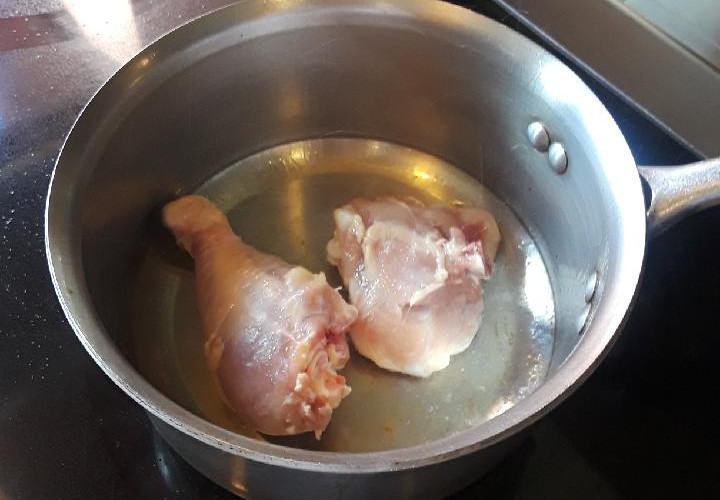

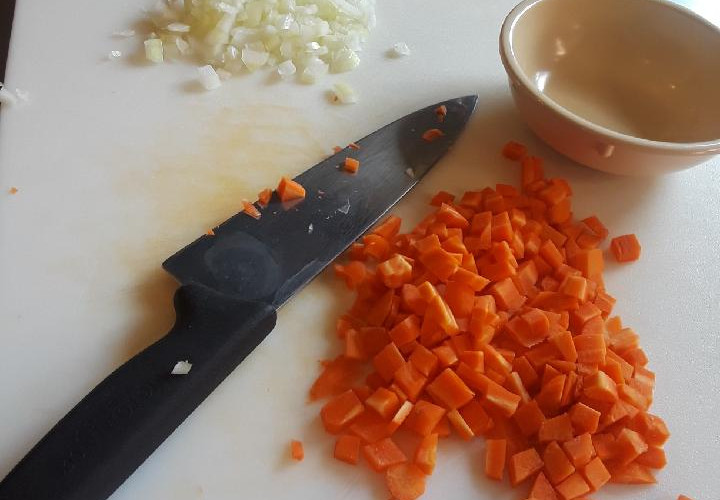



Here's some pictures of our demonstration in progress at our table. From the raw chicken, to the added mirepoix to the finished product & an action shot of me working with the recipe!
Here's a video of Chef teaching us the second half of the braising method which is centered around moisture.
A Weekly Concept Integrated From Another Class Into This One...
I'm in ACC 255 this semester and one of the most challenging lessons we've had are making journal entries. This lesson specifically calls to follow instructions and do a step-by-step process. The reason I've been able to understand this hard material we're learning is because I've been following the process using each step which has allowed me to understand why each step is being done. I can integrate that lesson into this class by knowing the importance of following instructions even if the material- or in our case the recipe- is unfamiliar to me.


Comments