Week 2: $10,000 Kitchen Tools & $100 Pieces of Meat, Oh My!
- Sep 7, 2017
- 3 min read
Day 1: Chef covered all of the basics on equipment identification day! From what certain pans are used for versus knife sharpeners he ensured us that every piece of equipment has a purpose. More popularly known in the hospitality industry are hotel pans which vary in size which affects the amount of people a pan can feed. This lead to a conversation about how portion control is everything while in the kitchen and anything and everything is solely based around the menu. If a chef found a problem, they should to the menu for a solution.
Then Chef threw in a couple of stories (probably to scare us). The one that stuck with me the most is the story of Betsy. Poor girl. Wasn't paying attention while cleaning equipment most would assume is harmless to the human body. Shocked, her finger went through a pipe used for decorating cakes etc. Thankfully, Chef is also a surgeon and was able to save Betsy's finger. Hearing this seriously cautioned me to be very aware while in the kitchen no matter if Im cooking or cleaning up. My biggest AHA moment of the day was when Chef stated this quote, "great cooking is paying attention to small details" hearing this I realized that the smallest things that happen in the kitchen can affect a dish either positively or negatively.
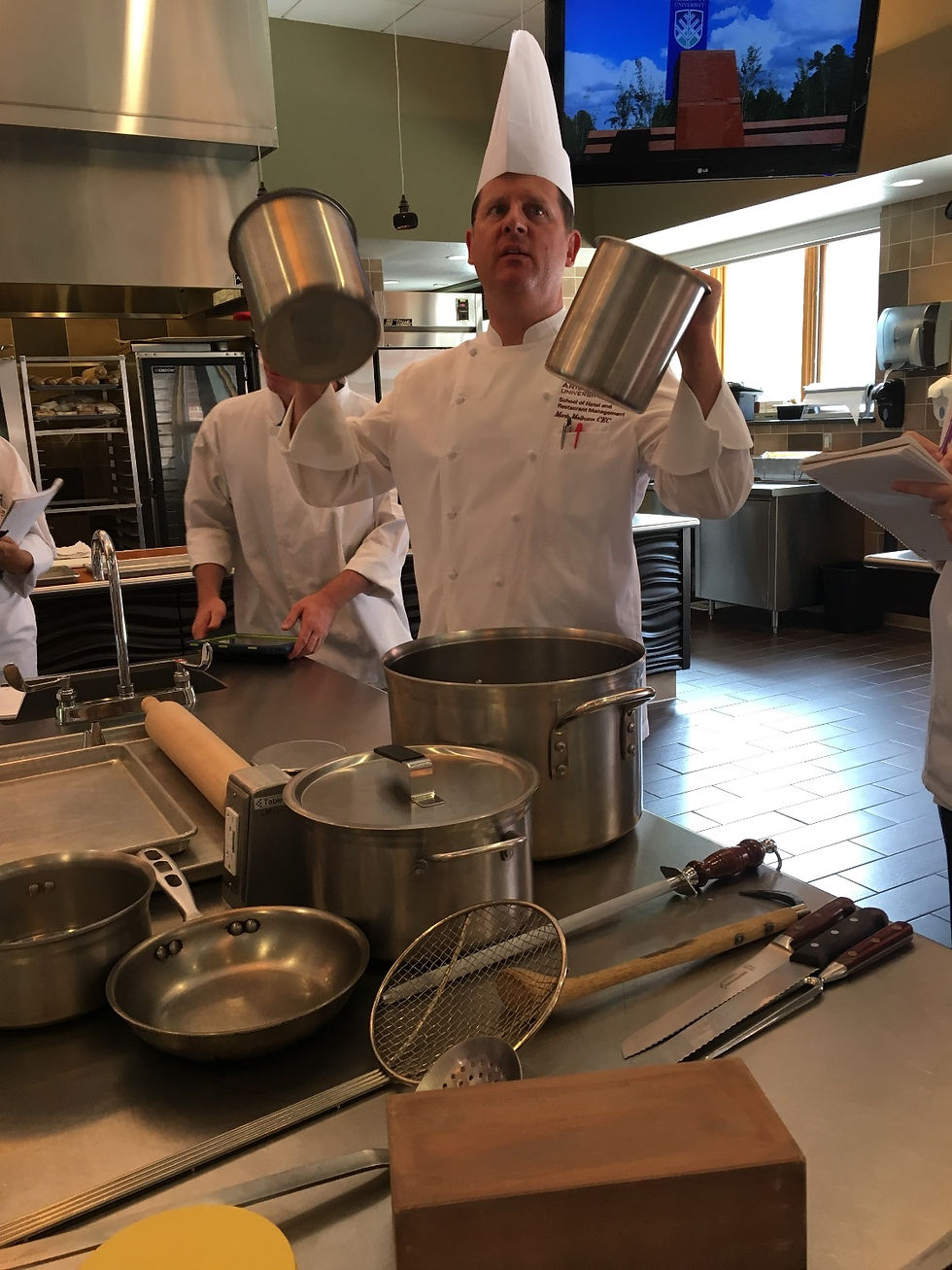
Here's Chef showing us the different varieties of pots that are available to use.
Day 2: Meet the meat! The day I had been waiting for all week. Being provided the lesson of how to identify a good piece of meat and how to properly treat it was eye opening to say the least. Ribeye beef has proven to be profitable because of how delicious it is as well as versatile because there are so many different elements of the meat to use for a dish. Chef proceeded to tell stories of Nebraskan slaughterhouses that signified the point of how important it is to know where the meat we eat comes from. I had never thought of that. It is incredibly important to know how the animals are grown and how they are killed. If killed in an inhumane way- the animal can become stressed just before it dies and that taints the meat's taste.
Finally we were ready to start cutting into the ribeye steak that Chef had so kindly provided for our lesson. As he cut into the meat he showed techniques on how to cut through certain areas and what to trim and what not to. Then he mentioned the 3 main cooking processes; dry-heat cooking, moist-heat cooking and combination cooking. After watching him finish trimming up the ribeye we were assigned to two teams for cooking the steak. Lucky enough I was picked for "Team Sauté " The process for cooking this meat was to:

1. Cover the meat with canola oil
2. Place on grill for 3 minutes
3. Flip & move meat to another location on grill
4. Let sit for 3 minutes
5. Remove from grill and check for 124 degree temperature
The meat turned out delicious! I enjoyed the taste of both techniques of cooking steak but ultimately preferred the Sauté version- I might have been bias though. My biggest AHA moment of the day was hearing Chef say a quote that resonated with me, "no more eating food, but rather taste your food." Something I've never thought about is how the taste of food affects my mood versus just eating to cure my hunger. I'll definitely live by that quote for the rest of my life.
Here was the finished look of the Suatéd steak! Very delicious!


Comments